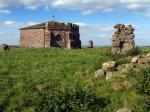
1240 – Westhoughton Manor acquired by the Abbey of Cockersand, near Cockerham. Land donated by Hulton’s at Hulton, Pendlebury’s at Snydale, Rylands at Daisy Hill and William at Brinsop in exchange for the monk’s prayers.
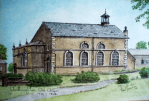
1509 – Chapel built on Westhoughton Moor, site of present St. Bartholomew’s, by Abbot of Cockersand.
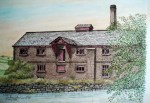
1451 – Westhoughton corn mill worked by Robert Platt. In the 1700’s the corn mill was waterpowered. The miller was a Mr Haddock whose descendants Alice Makant and Margaret Haddock gave the money to build Daisy Hill Parish Church.
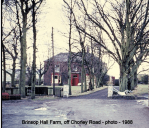
1534 - Henry VIII became head of church in England in 1534 and confiscated all monastic properties so that Westhoughton became Crown property until 1545. 1545 – James Browne, a cloth merchant, of London bought the Manor of WH from King Henry V111 for £1035.He resided at Brinsop Hall Farm.
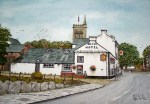
1608 – Located at the junction of Wigan Road and Church Street, the Red Lion was originally a staging post offering accommodation and stabling. The oldest part of the inn was formerly a farm house mentioned in the will of Adam Pendlebury, a farmer and weaver, in 1608.
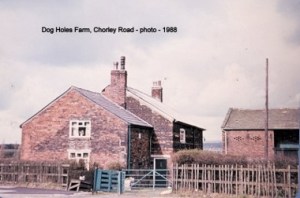
1592 – The earliest recorded reference to this house is dated 1592. It was then part of a farm of the Laythwaite family who farmed the Brinsop area as tenants of Cockersand Abbey from the 1400’s when the first house was built. It was modernised in 1689 by Oliver Peake who replaced the wattle and clay with pink brick.
1600 – At the age of twenty-one Ann Battersby was sentenced to ten years’ transportation for persistent thieving, and in 1844 she sailed for Van Diemen’s Land in the Angelina.
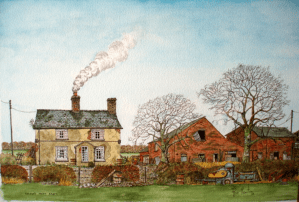
In Hobart Town, William Lyall and Ann Battersby met and married. By 1851 they had two children. As soon as they were free to leave Van Diemen’s Land they crossed Bass Strait to Victoria where the gold-rush was just beginning. After three years in the town of Geelong they moved on to the gold-diggings at Creswick. This was the place where William and Ann stayed for the rest of their lives and brought up seven children. In Creswick they were respected and respectable citizens. No one had any idea that they had ever been convicts.”
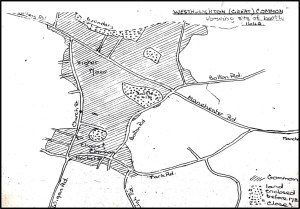
1642 – Civil war, between Charles I and Parliamentarians. “Battle of Westhoughton Common” – resulted in a Royalist victory at Warcock Hill.
1784/5 – John Wesley preached at Wingates in April of both years at Barnaby’s Farm, located on the A6.
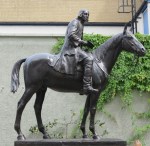
John Wesley was one of the founders of Methodism, so called because of his methodical approach to organising the teaching religion in groups, classes. He preached outdoors and travelled thousands of miles in a year delivering many sermons.
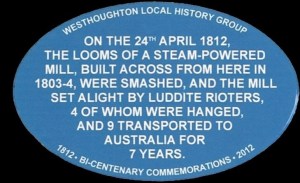
1812 – Burning of Westhoughton Mill by Luddites.
None of the Luddites who attacked the Mill were residents of Westhoughton, but came from Chowbent.
In fact many of the Mill workers lost their jobs after the fire.
1819 – Peterloo massacre in Manchester.
William Hulton was the son of William Hulton and Jane (née Brooke). He was educated at Brasenose College, Oxford. In 1808 he married his cousin Maria Ford with whom he had 13 children, 10 of whom survived to maturity.
In 1811 he was appointed High Sheriff of Lancashire. In this capacity he ordered the arrest of 12 men, Luddites, for arson at Westhoughton Mill in Westhoughton town centre. Four of the offenders were hanged outside,Lancaster Castle, including a boy aged 15. Hulton gained a reputation as being tough on crime and political dissent and in 1819 was made chairman of the Lancashire and Cheshire Magistrates, a body set up for dealing with the civil unrest endemic in the area.
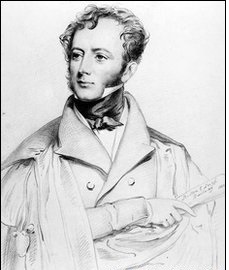
In 1819 he summoned the local Yeomanry to deal with a large crowd in St Peter’s Square in Manchester which had gathered to hear the political agitator Henry Hunt. Several men from Wingates were reported to have walked to this meeting. The Yeomanry, on horseback with sabres drawn, forced its way through the crowd to break up the rally and allow Hunt to be arrested. Fifteen people died from sabre and musket wounds or trampling and the event became known as the Peterloo Massacre. Hulton was vilified by the local population and was obliged to decline a safe parliamentary seat offered to him in 1820.
Death: He died on the 30th of March 1864 at Leamington Priors, Warwickshire & was buried on the 5th of April 1864 at Deane, Lancashire.
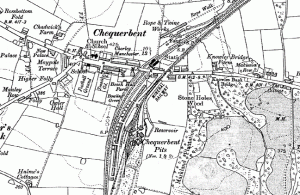
1828 – First public railway in Lancashire – the Bolton and Leigh Railway. Primarily constructed, by William Hulton, to transport coal from the Hulton owned mines at Chequerbent to Bolton and south to Leigh and the canal system and ultimately the Manchester to Liverpool railway.
William Hulton was the chairman of the company, George Stephenson the engineer and Mr Hargreaves of Hart Common in charge of working the line.1831 – Bolton and Leigh Railway opened 18th June and the first station built was at Chequerbent.
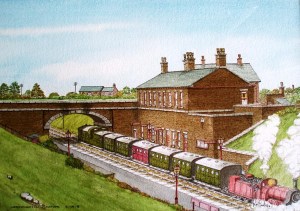
1848 – Westhoughton Railway Station opened by the Liverpool and Bury Railway Company.
1851- John Chadwick owned Peel Mills, a silk mill at Peel Street. In 1915, James Wrigglesworth, re-opened the mill as a pharmaceutical manufacturing business and employed several hundred local people, making medicated sweets, ointments, creams, toothpaste, tonics and cough mixtures.
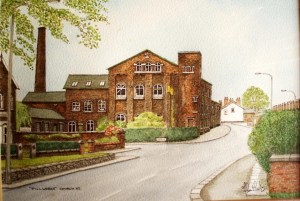
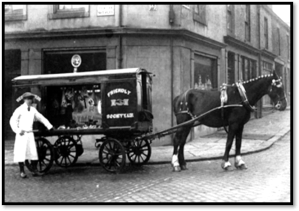
1858 – Westhoughton Friendly Cooperative Society Ltd registered in April. Founded by workmen who migrated from Rochdale to work at Westhoughton Old Mill. First grocery shop opened on Good Friday.
1853 – The Bethel was built and extended to create a Sunday School in 1873.
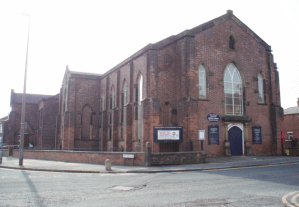
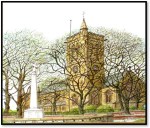
1871 – The Parish church of St Bartholomew was built on the site of the Old Chapel in 1871 using money donated by John Seddon of the Morton’s. John Seddon was a great benefactor of Westhoughton churches and also provided employment by building the Albion and Victoria cotton mills and Green Vale bleachworks.
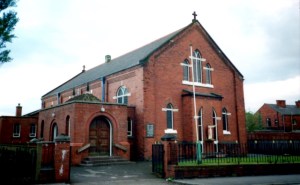
1873 – Sacred Heart Catholic Church opened. Situated on Lord Street.
 Westhoughton Local history